What comes to mind when you hear promotional products? A drawer full of plastic pens? A stress ball that mysteriously survived three office moves? A tote bag that seemed useful, until the handles gave out?
Promotional products are changing. Today, businesses are moving beyond random giveaways and toward useful, well-designed branded merchandise that people want to keep, wear, and use. The goal isn’t simply to distribute more items. It’s to create better brand experiences.
That shift is reshaping everything from company swag and event giveaways to employee uniforms, onboarding kits, and customer gifts.
Promotional Products Are Becoming Brand Experiences
The language around promotional products is evolving because expectations are evolving.
“Giveaway” suggests something temporary, an item handed out quickly and forgotten just as quickly. “Branded merchandise” feels more intentional. It suggests a product selected for its quality, usefulness, and connection to the brand.
That distinction matters.
Your merchandise represents your company when you aren’t in the room. A well-made jacket can communicate professionalism. A thoughtfully designed welcome kit can make a new employee feel valued before their first day. A useful drinkware item can keep your logo visible during commutes, meetings, and weekend errands.
As one practical rule puts it:
“The best promotional product is the one people choose to use after the event is over.”
That doesn’t mean every item needs to be expensive or luxurious. It means the item should make sense for the audience, the setting, and the way people will actually use it.
Disposable Giveaways vs. Useful Branded Merchandise
Low-cost promotional products still have a place, but they aren’t the right answer for every campaign. The key difference is whether the item creates lasting value or short-lived exposure.
Disposable giveaway items often have:
- Limited usefulness
- Lower perceived value
- Generic designs
- Shorter product lifespans
- Little connection to the recipient’s daily routine
Well-selected branded merchandise offers:
- Practical value
- Better materials and construction
- A stronger connection to your brand
- More opportunities for repeat use
- A more positive impression of your organization
Consider the difference between a thin, disposable tote and a durable canvas bag. Both carry a logo. Only one is likely to become someone’s grocery bag, work bag, beach bag, or everyday carry-all.
The same principle applies to apparel. A thin custom t-shirt with an oversized logo may be acceptable for a one-day volunteer event. A soft, properly fitted shirt with thoughtful decoration has a much better chance of becoming part of someone’s regular wardrobe.
Why Premium Branded Apparel Has Staying Power
Quality branded apparel works because it combines usefulness with visibility. People already wear shirts, polos, hoodies, caps, jackets, and outerwear. When those garments fit well and feel comfortable, your brand becomes part of the recipient’s routine.
That can support several important business goals.
Employee pride
Employees are more likely to wear apparel that feels comfortable, attractive, and appropriate for their role. Quality custom apparel can help teams feel connected without making everyone look like they received the same last-minute event shirt.
Customer impressions
For customer-facing employees, custom uniforms create consistency and professionalism. A well-decorated polo, jacket, or work shirt helps customers identify your team and reinforces confidence in your organization.
Recruiting and onboarding
A new hire kit is often one of the first physical expressions of company culture. Pairing custom apparel with useful drinkware, bags, notebooks, or technology accessories can make onboarding feel organized and welcoming.
Events and community engagement
At conferences, fundraisers, and company events, premium items can help your organization stand apart. People may forget a conversation from a crowded trade show, but they may remember the comfortable jacket or durable tote they kept using afterward.
Long-term brand visibility
A practical product earns more opportunities to be seen. A branded hoodie worn on a Saturday morning, a cap used on a hiking trip, or a tumbler carried to work can create visibility well beyond the original campaign.

The Sunday Morning Test
Here’s a simple way to evaluate branded apparel:
Would someone wear it on a Sunday morning when they aren’t required to represent your company?
That’s the Sunday Morning Test.
If the answer is yes, the garment is probably comfortable, attractive, and versatile enough to create value beyond the workplace. It should also be polished enough for work, travel, casual meetings, or team events.
The best pieces can move between settings:
- A premium t-shirt for casual Fridays and weekends
- A performance polo for client meetings and field work
- A quarter-zip or vest for travel and changing weather
- A structured cap for outdoor events
- A quality hoodie for team culture and everyday wear
The logo doesn’t need to dominate the garment. Subtle left-chest embroidery, a clean sleeve mark, a tonal print, or a thoughtfully designed back graphic may feel more wearable than a crowded design.
How to Choose Quality Branded Merchandise
Premium doesn’t begin with a logo. It begins with the product itself.
Before ordering custom t-shirts, custom uniforms, or other promotional products, review these factors:
1. Fit and sizing
Choose styles that work for the actual audience. Consider unisex, women’s, and relaxed or tailored fits where appropriate. Inclusive sizing also helps more recipients feel comfortable wearing the product.
2. Fabric weight and feel
A lightweight shirt may be ideal for summer events, while a heavier fabric can feel more substantial and retail-inspired. Performance fabrics may be better for outdoor teams, travel, or active work environments.
3. Function
Ask how the item will be used. Does it need moisture-wicking performance, stain resistance, insulation, visibility, pockets, or easy-care construction? The best merchandise solves a real problem.
4. Decoration method
The decoration should match both the garment and the design:
- Screen printing: A durable choice for bold graphics and larger runs
- Embroidery: A polished option for polos, outerwear, hats, and uniforms
- Full-color digital printing or DTF: Useful for detailed artwork, gradients, small runs, and variable designs
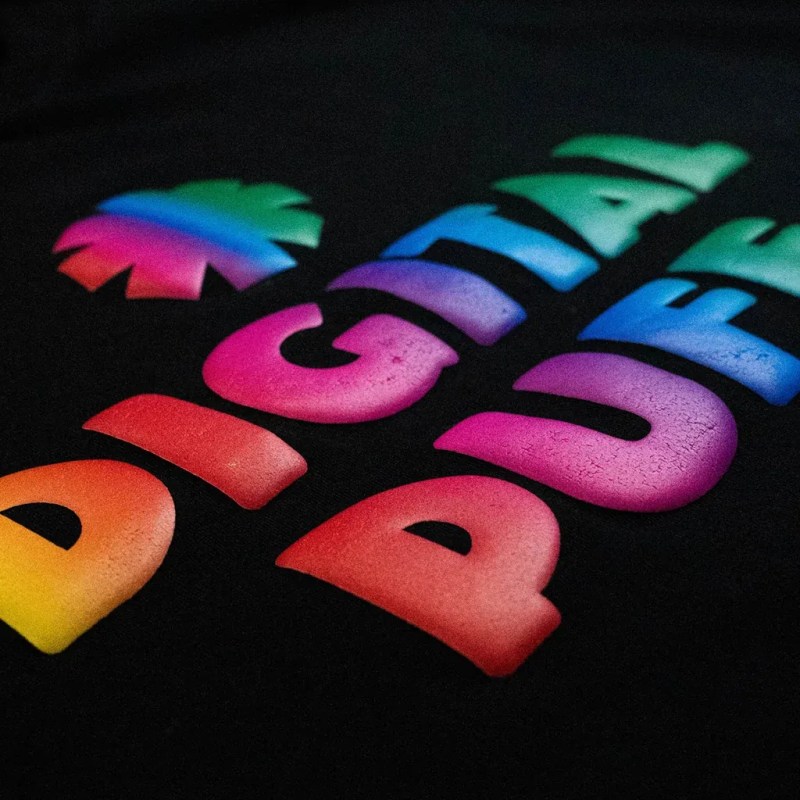
- Puff printing: Adds raised dimension and a tactile finish
- Raised silicone: Creates a modern, durable, rubberized effect
- PVC badges: Well-suited to workwear, caps, jackets, and outdoor apparel
- Embroidered or print/embroidery combo patches: Add texture and visual depth
- Butter-soft pre-washed screen prints: Create a broken-in, comfortable feel
- Glow-in-the-dark effects: Add visibility and event appeal when the use case supports them
API Corporate can help coordinate the right technique based on the item, artwork, quantity, budget, deadline, and expected use. Learn more about API Corporate’s apparel decoration processes.
5. Color and logo placement
Color should support your brand while keeping the garment wearable. Logo placement also affects perceived quality. A small left-chest mark, sleeve detail, neck label, or tonal decoration may look more refined than placing the largest possible logo on every surface.
6. Product usefulness
Choose products people already use. Quality drinkware, bags, outerwear, notebooks, tech accessories, and custom apparel can all work well when selected with the audience in mind.
Traditional Promotional Products Still Have a Role
The move toward premium merchandise doesn’t mean traditional promotional products are obsolete. They remain useful for specific goals.
Low-cost or high-volume items can make sense for:
- Trade shows with large attendance
- Community festivals and public events
- Product sampling
- Broad-reach awareness campaigns
- School, nonprofit, or volunteer initiatives
- Booth traffic and quick interactions
- Campaigns with a very large distribution list
A pen, sticker, koozie, or basic tote may be exactly right when the priority is reaching as many people as possible within a fixed budget.
The important question is not, “Are inexpensive items bad?” It’s:
What role is each item playing in the overall program?
A balanced strategy may include high-volume event items for reach, premium apparel for employees and key customers, and practical gifts for milestones or relationship-building.

Build a Promotional Products Program: Not a Random Order
An intentional program starts with goals and audiences rather than a product catalog.
Use this framework:
Define the audience
Are you ordering for employees, customers, prospects, event attendees, new hires, field crews, or executives? Each group may need a different product mix.
Assign a purpose
Connect each item to a business objective:
- Employee pride
- Uniform consistency
- Recruiting
- Customer appreciation
- Event awareness
- New hire onboarding
- Sales enablement
- Community outreach
Create product tiers
A simple tiered structure can make budgeting easier:
- Reach: High-volume, economical event items
- Everyday: Useful shirts, drinkware, bags, and accessories
- Premium: Outerwear, retail-quality apparel, executive gifts, and milestone rewards
Standardize your brand system
Document approved colors, logo versions, decoration methods, garment styles, and placement guidelines. This improves consistency across locations, departments, and reorder cycles.
Plan for storage and fulfillment
If products will be distributed throughout the year, consider warehousing, kitting, drop shipping, and a company store. API Corporate can support company store programs, managed merchandise, employee ordering, bulk distribution, and on-demand fulfillment.
A structured program can reduce administrative work while helping teams access approved products more easily. It also makes reordering less chaotic: because “we need 43 shirts by Friday” is not a complete merchandise strategy.
A More Intentional Future for Company Swag
The promotional products rebrand is really a shift from more stuff to better choices.
Premium branded merchandise doesn’t replace every traditional giveaway. Instead, it gives businesses more ways to match the product to the purpose. A quality garment can support employee pride and long-term visibility. A practical gift can strengthen a customer relationship. A cost-effective event item can extend reach.
API Corporate brings more than 50 years of experience, family-owned service, in-house screen printing and embroidery, full-color digital and DTF capabilities, specialty decoration, short-run and rush production, and the capacity to manage large or complex projects. Through strategic supplier partnerships, we can help source the right garments and products for your audience: not simply the first item that fits a search filter.
We also support warehousing, fulfillment, drop shipping, and company store programs when your merchandise needs to operate as an ongoing system.
Ready to make your promotional products more useful, wearable, and aligned with your brand? Start a project with API Corporate and let’s build a merchandise program people will be glad to receive: and even happier to use.

