Have you ever found yourself staring at a stack of custom t-shirts, wondering why one logo looks like it’s practically part of the fabric while another feels like a crisp, high-definition sticker? Or maybe you're in the middle of planning your company's next big rebrand and you’re paralyzed by the choices: "Do I go with the 'old school' screen printing, or is this new DTF thing everyone’s talking about actually the better move?"
Choosing the right printing method for your custom apparel can feel a bit like trying to pick the right car. Are you looking for a heavy-duty truck that can haul a massive load (bulk orders), or do you need a nimble, high-tech sports car that handles complex turns (detailed graphics) with ease?
At API Corporate, we’ve seen it all. With over 50 years of experience, literally growing up in the world of ink and mesh, we’ve lived through the evolution of the industry. We love the "old ways," but we’re obsessed with the "new ways," too. Let’s break down the ultimate face-off: Screen Printing vs. Direct to Film (DTF), and figure out which one is going to make your brand look like a million bucks.
The "Old Guard": The Timeless Art of Screen Printing
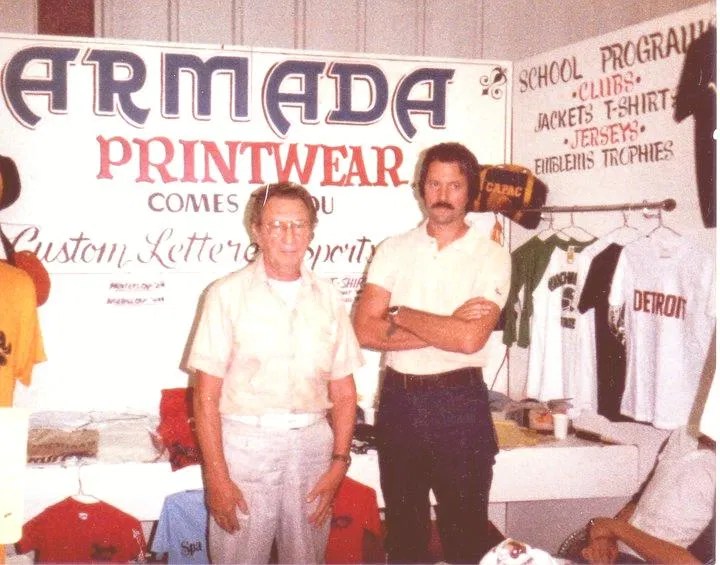
Let’s talk about the legend first. Screen printing is the bedrock of the branded apparel world. If you’ve ever worn a classic band t-shirt or a high school spirit hoodie, you’ve likely felt the work of a screen press.
The process is beautiful in its simplicity: we take your design, burn it onto a mesh screen, and then literally push ink through that screen onto the garment. If your logo has three colors? That’s three different screens. Four colors? Four screens. You get the idea. (Yes, it’s a lot of setup, but man, is the result worth it!)
Why We Still Love Screen Printing
- Vibrancy that Pops: There is nothing, and I mean nothing, quite like the color saturation of screen printing. Because we’re using actual liquid ink (often plastisol), the colors are incredibly bold. If you need a specific Pantone matched for your corporate branding, screen printing is your best friend.
- Durability for Days: Screen printed designs are built to last. We’re talking 50+ washes without breaking a sweat. It’s the gold standard for custom t-shirts that are going to be lived in, worked in, and washed a thousand times.
- The "Bulk" King: This is where screen printing shines. Because the setup is the hardest part, the price drops significantly as you order more. If you’re ordering 500 shirts for a national conference, screen printing is going to be the most cost-effective way to get high-quality results.

The Downsides (Nobody’s Perfect)
The biggest "con" is the setup. Because every color requires a new screen, highly complex designs with gradients or 12 different colors can become very expensive and time-consuming. It’s not really the go-to for a "one-off" shirt for your cousin’s birthday, unless you want to pay a premium for that one screen!
The "New Kid": The Digital Wizardry of DTF (Direct to Film)
Now, let’s talk about the disruptor. Direct to Film, or DTF, has completely changed the game for custom apparel in the last few years.
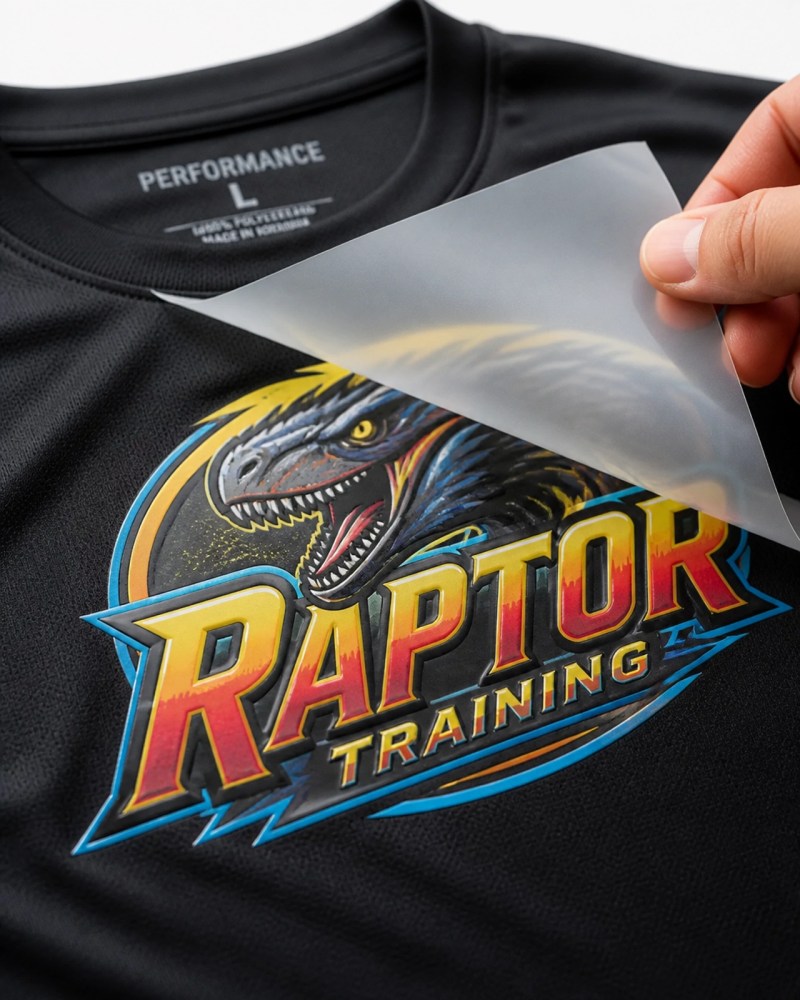
Instead of screens and squeegees, DTF uses a specialized digital printer to print your design onto a clear film. We then add a unique adhesive powder, cure it, and heat-press that film onto the shirt. It sounds like magic because, honestly, it kind of is.
Why DTF Is Taking Over
- Detail, Detail, Detail: Do you have a logo with tiny text, crazy gradients, or even a photographic element? DTF handles it effortlessly. Since it’s a digital process, it can reproduce millions of colors and sharp lines that would be a nightmare to try and screen print.
- Fabric Versatility: This is a big one! Screen printing can be finicky on some synthetic fabrics (like that fancy moisture-wicking performance gear). DTF, however, plays well with almost anything, cotton, polyester, blends, even some nylon. It’s the ultimate "all-rounder" for your uniform programs.
- Perfect for Small Batches: Since there are no screens to burn, we can get your order moving much faster for smaller runs. Need 12 high-end hoodies for your executive team? DTF is likely the winner here.
The "Feel" Factor
If there’s one thing to watch out for, it’s the "hand" or the feel of the print. On large, solid blocks of color, DTF can feel a bit like a thin layer of film sitting on the shirt. It’s not "heavy," per se, but it doesn't quite sink into the fibers the way screen printing does. (But hey, for that level of detail, most people don't mind a bit!)
The Head-to-Head: A Quick Breakdown
Still on the fence? Let’s put them in the ring together and see how they stack up across the board.
| Feature | Screen Printing | Direct to Film (DTF) |
|---|---|---|
| Best For | High volume, simple designs | Small-to-medium runs, complex art |
| Color Complexity | Best for 1-4 spot colors | Infinite colors, gradients, photos |
| Durability | Extremely high (50+ washes) | High (40-50+ washes) |
| Fabric Choice | Primarily cotton and cotton-rich | Cotton, Poly, Blends, Performance |
| Cost (Bulk) | Lowest cost per piece | Moderate |
| Cost (Small Run) | Higher due to setup fees | Very cost-effective |
Why API Corporate Is Your Secret Weapon
You might be thinking, "This is great, but I still don't know which one I need!"
And that’s exactly why we’re here. Remember those 50+ years of roots I mentioned? We didn't just stay in the past; we invested in the future. We handle both screen printing and DTF in-house, which is a huge deal for you.
Many online shops only offer one or the other, so they'll try to shoehorn your project into whatever equipment they happen to have. Not us. Because we do it all right here in our own facility, we can look at your artwork, your garment choice, and your budget, and give you an honest recommendation.
Sometimes the answer is actually "both!" We often handle complex projects where the main t-shirts are screen printed for volume, but the matching high-performance jackets are done with DTF to ensure the logo stays sharp on the tricky fabric.
The Verdict: Which One Should You Choose?
So, back to that original question: which is better for your branded apparel?
Go with Screen Printing if:
- You’re ordering 50+ pieces of the same design.
- Your logo is bold and uses just a few colors.
- You’re printing on 100% cotton t-shirts or hoodies.
- You want that "classic" ink feel and maximum longevity.
Go with DTF if:
- You need a small run (under 24-48 pieces).
- Your artwork has a lot of colors, shading, or photographic detail.
- You’re printing on performance polyester or tricky blends.
- You need a fast turnaround for a complex design.

At the end of the day, your brand deserves to look its best, whether it's on a simple t-shirt or a high-end corporate uniform. Don't leave it to chance with an "automated" online tool that doesn't understand the nuances of ink and fabric.
Ready to get started? Whether you’ve got a massive bulk order or a tricky, high-detail project, we’d love to help you bring it to life. Check out our product catalogs for inspiration, or reach out to us today to chat about your next custom apparel project! (We promise we won't geek out too much about the ink chemistry… unless you want us to!)

